Our careers led us to AI. The hype didn’t.
A German-American team that has spent decades turning data into decisions for large organisations, now building the AI assistant for food R&D.
Why we built Alchemyst
Knowledge workers spend about a fifth of their week tracking down information (McKinsey Global Institute, 2012). In food R&D that search runs through millions of papers and regulations that keep changing — time taken from actual product innovation. The literature is vast, fragmented across millions of papers, and the regulatory landscape changes constantly. A missed EFSA update can invalidate months of work.
We didn't arrive at AI with the hype. Between us, we have spent decades turning data into decisions: big data and analytics first, then predictive models and machine learning, now AI. Along the way we delivered data projects for organisations such as SAP, BMW, Volkswagen, Mercedes, Airbus, Infineon, NXP, Telefónica, Vodafone, Whirlpool (now Beko Europe), Sage and Ripple. Alchemyst is where that path led us: a problem we saw up close in food R&D, and the experience to solve it for large organisations.
The result is a purpose-built AI assistant — not a generic chatbot repurposed for food science, but a product designed from the ground up for formulators, researchers and R&D teams who need structured, cited, verifiable answers.
Accelerating functional foods innovation through AI — so the world's best food scientists can focus on what only they can do.
The assistant every food researcher and product developer would dream of
Alchemyst augments R&D, regulatory and research teams. It reads the literature, watches recalls and regulations, and answers in the context of your markets and products — so your experts spend their time on judgement, not searching.
Our direction is the AI Workbench: one place where evidence, formulation work and regulatory checks meet, taking a product from first question to shelf. We are building it step by step on top of the assistant teams use today.
Why Alchemyst
Four advantages that are hard to copy with a general-purpose model.
Curated domain corpus
Millions of peer-reviewed papers from PubMed, curated for food science, plus live recall, regulatory and research feeds. Trials, composition data and patents are next.
Shaped in European food research
Our technology grew out of applied research with universities, food manufacturers and biotech companies, and keeps getting tested by working food scientists.
Open-weight model direction
Our Intelligence Network roadmap builds domain models on open weights, so customers can run them privately and keep control of their data.
German-US team
European food science and regulatory depth, combined with US software and go-to-market experience.
The founding team



Advisory Board
Industry and technology experts who guide our product and go-to-market strategy.
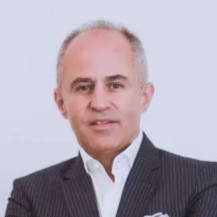
Dr. Dr. Cem Aydogan
Industry Advisor
Founder & CEO, PhytoNet AG (Switzerland)
Domain and industry expert.
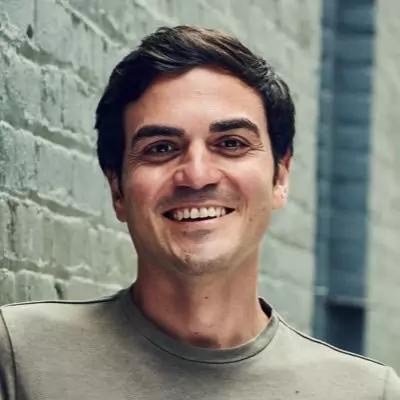
Bugra Akcay
Technology Advisor
Co-founder & Board Director, Collective Hub, Inc. (United States)
Technology and product expert.

Bilal Khan
Funding Advisor
Founder & CEO, Neurobay Ltd. (United Kingdom)
Fundraising and investor relations.

Dr. Toralf Kahlert
Business Advisor
Founder & CEO, Pumacy Technologies AG (Germany)
Incubation and business development in Germany/Europe.
A German-American company
Bridging cutting-edge AI research across two continents to accelerate functional food development.
San Francisco, USA — Global Headquarters
Strategic innovation center driving AI research and business development in the heart of Silicon Valley's tech ecosystem.
28 Geary Street, Suite 650 #2654
San Francisco, CA 94108
Germany — Research & Development
Product development and applied research, close to the European food industry and its research and innovation networks.
Shaped in European food research
The technology behind Alchemyst grew out of applied research projects in Europe, alongside universities, food manufacturers and biotech companies. What we took from them is know-how and the honest feedback of working food scientists and developers, not their data.
Literature synthesis
The research engine at the core of every answer
Real R&D teams
Universities, food manufacturers and biotech companies
Tested before it ships
Features are tried on real food questions first